“It’s very difficult to have three captains” — Agarkar’s Case for Unified Leadership
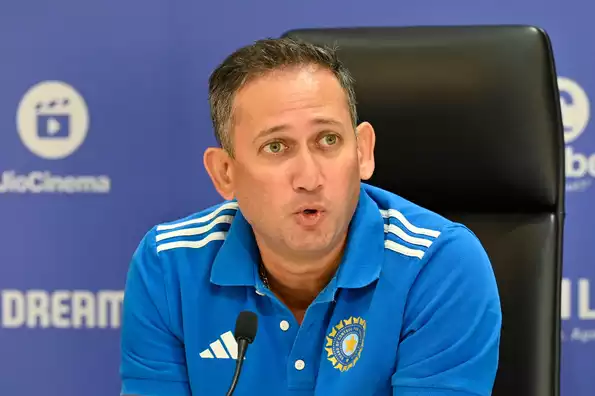
With recent shifts in India’s leadership across formats, Ajit Agarkar has publicly questioned the feasibility of maintaining three separate captains in Test, ODI, and T20I. He argues that from planning to execution, it places undue strain on selectors, coaches, and players. Cricbuzz
In a press conference unveiling India’s limited-overs squads ahead of the Australia series, Agarkar explained that the scheduling and scarcity of ODI fixtures further complicate matters. He noted that giving a captain enough time to prepare, build rapport with the team, and strategize is already tough—with three format captains, that becomes “very difficult.” Cricbuzz
But beyond theory, this is a tension playing out in real time for Indian cricket. With Shubman Gill taking over as ODI skipper, Suryakumar Yadav leading T20Is, and a potentially different Test captain (or Gill doubling up) being debated, the question is: Is Agarkar right? And what are the trade-offs?
Why Agarkar Sees the Problem
1. Logistics & Preparation Challenges
Agarkar points out that the infrequency of ODI fixtures means a captain rarely gets a long enough window to plan and build momentum. Cricbuzz+1 With few games, the captain has limited time to assert a system, test combinations, or execute long-term strategies. He observes that in some past stretches, India played just one or two ODIs a year — which doesn’t allow much breathing space. Cricbuzz
Coaches also have to adjust constantly: working with different leaders, styles, preferences, and relationships for each format. That may dilute clarity in team culture and tactical consistency. Cricbuzz
2. Transition & Succession Planning
Agarkar’s remarks also tie into succession planning. He believes that centralizing leadership gives a “next guy” time to settle in. If a cricketer is being groomed for captaincy, rather than hopping formats, they get a chance to establish themselves. Cricbuzz
The longer a captain leads a format, the more continuity there is in vision, systems, team identity, and accountability. Switching ideas across formats risks fragmentation.
3. Clarity & Authority
Multiple captains can lead to diffused authority. When players receive guidance from different leaders, conflicting messages may emerge. A captain needs to own decision-making and culture; having three might dilute that sense of ownership.
Agarkar’s point is not unique to India. In cricket globally, hybrid or overlapping leadership models sometimes generate confusion in communication, especially in transitions or overlapping tours.
The Counterpoints: Where Multiple Captains Make Sense
While Agarkar raises valid concerns, having separate captains per format also has distinct upsides. Let’s explore those.
1. Format Specialization
Each format of cricket (Test, ODI, T20) requires distinct approaches, temperaments, tactics, and leadership styles. A player who is great in Test cricket may not have the aggression, instincts or game sense ideal for T20 or vice versa. Having format specialists allows leaders whose strengths align with the demands of that format.
2. Workload & Burnout
Captaining across all formats is taxing—mentally, physically, and emotionally. Spreading leadership can reduce burnout and allow captains to focus on fewer formats, giving more energy per match. If one captain is rested in one format, others can take over without disruption.
3. Backup & Continuity
If a captain is injured, unavailable, or out of form in one format, having another leader in place ensures continuity without abrupt change. It also opens opportunities for talent to lead without dislodging incumbents in other formats.
4. Flexibility in Scheduling
India’s cricket calendar is dense and often overlapping. Having different captains allows rotations and rest periods without overburdening one individual. In overlapping tours or tight scheduling, format leaders can manage their segments.
The Middle Ground: Hybrid Models & Transitional Leadership
Perhaps the optimal path lies between extremes. Some options to reconcile Agarkar’s concerns with format specialization include:
- Primary Captain + Deputies Model
One captain across formats, but with strong deputies handling decision-making support, communications, or leadership in certain matches. - Two Captains, Not Three
One captain shared across two formats (e.g., Test + ODI) and a separate T20 captain (or vice versa). This reduces the number of leaders from three to two and gives more stability while retaining specialization. - Phased Transition
As older captains phase out, a younger one could gradually take over multiple formats. During the transition, overlap is tolerated for a season before consolidation. - Clear Format Autonomy Zones
Define leadership boundaries—for example, election of captain for certain decisions per format, but overall strategic direction from a central leadership group (selector + head coach + captain core).
Why India’s Current Timing Makes It Particularly Fraught
India’s current cricket phase adds urgency to Agarkar’s comments:
- Leadership Transition under Way
Rohit Sharma has been removed as ODI captain; Shubman Gill takes over. Meanwhile, T20Is are led by Suryakumar Yadav. The Test captaincy situation is fluid. Hindustan Times+4Cricbuzz+4ESPN Cricinfo+4 - Emphasis on the 2027 World Cup
With the next ODI World Cup two years away, the selectors must give captains time to build systems. Agarkar alludes to that timeline in his remarks. Cricbuzz - ODI Schedule Uncertainty
India’s ODI matches are sporadic; sometimes long gaps between series make captaincy harder to sustain. Cricbuzz
In such a moment of flux, a fragmented leadership model may lead to inconsistent planning, mixed messaging, and confusion during high-stakes series.
What India Must Watch Out For
- Consistency of Tactics & Culture
Even with different captains, the underlying strategy, playing philosophy, and team culture should remain cohesive. A central strategy team (selectors, head coach) must anchor continuity. - Communication Between Leaders
Captains of different formats must sync—so that innovations or learnings in one format can benefit others (e.g., fielding shifts, player roles, rotation plans). - Player Buy-in
Players must trust each leader; transitions shouldn’t feel abrupt or disrespectful. Senior players can bridge across formats to maintain stability. - Risk of Fragmentation in Tour Planning
Tours often mix formats. If captains differ, ensuring overlap, rest scheduling, and match planning requires more coordination. - Accountability Clarity
When a loss happens, who is responsible? Clear accountability lines—selectors, coaches, captain—are critical to avoid blame games or confusion.
Final Take
Agarkar’s caution against having three different captains isn’t a blanket rejection of format specialization—but a warning about how fragmented leadership can strain planning, coherence, and continuity. His point resonates especially in India’s context: during a leadership transition, with fragmented ODI scheduling, and with big tournaments looming, clarity and consistency matter.
While multiple captains make theoretical sense, they must be deployed with guardrails: synergy between leaders, streamlined strategy, and careful communication. India’s cricket setup, with strong backing staff and institutional memory, may navigate it—but only if the implementation is thoughtful, not reactive.
In the end, captains are not just match strategists—they are drivers of culture, vision, and identity. Having fewer but stronger leaders might just be the trade-off worth making—especially when every direction matters on the path to the next World Cup.